Cost guide
Whole-house rewiring cost in Redding, CA
What it actually costs to rewire an older Redding home in 2026 — the two numbers you'll hear and why they differ, knob-and-tube and aluminum specifics, permits by jurisdiction, and how to tell if you need it at all.
As of October 2026, rewiring a house in Redding, CA typically costs $2–$4 per square foot for the wiring work itself — $5,000–$10,000 for a 2,500 sq ft home — and $5–$17 per square foot all-in ($10,000–$30,000 typical) once wall opening and patching, a panel upgrade and permits are counted.
Redding Electric Pro — Call for a Quote
2026 rewiring cost by scope
Two national cost guides publish rewiring figures that look like they disagree by a factor of three. They don't — they're pricing different jobs. Angi (updated 2026-10-13) prices the wiring work; HomeGuide (2025-08-29) prices the whole project including the walls you have to open and close. No Redding electrician publishes a local rewiring rate, so these are the reference points — the hourly rates behind them ($50–$130/hr standard) are the same ones on our repair cost guide.
| Scope | Typical cost | Notes |
|---|---|---|
| Rewiring only (labor + wire + devices) | $2–$4 per square foot | $5,000–$10,000 for a 2,500 sq ft home — walls open during a remodel, or an attic/crawlspace the electrician can fish from (Angi, 2026-10-13) |
| All-in rewire (walls opened and patched, panel, permits) | $5–$17 per square foot | $10,000–$30,000 typical whole-house total; $12,500–$42,500 for 2,500 sq ft (HomeGuide, 2025-08-29) |
| Knob-and-tube replacement | $8–$17 per square foot | $12,000–$35,000 total — plaster walls and no ground wire anywhere put it at the top of the range (HomeGuide, 2026-02-12) |
Ranges reflect published national industry cost-data sources read 2026-10-19. Actual quotes vary with wall construction, attic and crawlspace access, home age, and whether the panel is replaced in the same job.
Cost by house size
Same two scopes, by square footage. Use the left column if your walls will be open anyway (a remodel, a flip, a gutted room) or your home has an accessible attic and crawlspace; use the right column for a finished, occupied house where every wall has to be opened and patched.
| Home size | Wiring only | All-in |
|---|---|---|
| 1,000 sq ft | $2,000–$4,000 | $5,000–$17,000 |
| 1,500 sq ft | $3,000–$6,000 | $7,500–$25,500 |
| 2,000 sq ft | $4,000–$8,000 | $10,000–$34,000 |
| 2,500 sq ft | $5,000–$10,000 | $12,500–$42,500 |
| 3,000 sq ft | $6,000–$12,000 | $15,000–$51,000 |
Wiring-only column: Angi, 2026-10-13. All-in column: HomeGuide, 2025-08-29.
What moves a Redding rewire between those two numbers
- Wall construction. Drywall over wood studs can be opened in small, cheap patches. Lath-and-plaster — common in the oldest houses, and in most homes that still have knob-and-tube — crumbles around every cut and costs far more to repair, which is why the knob-and-tube figures above start higher.
- Attic and crawlspace access. A single-story home with a walkable attic and a crawlspace underneath lets an electrician fish most runs without opening walls at all. A slab-on-grade house with a low attic, or a two-story with finished ceilings between floors, pushes toward the all-in column.
- Summer timing. Rewiring is attic work, and Redding attics in July and August are brutal — electricians schedule early-morning attic time or push the job to spring and fall. If you can choose, a cooler-season rewire is easier to schedule and sometimes cheaper.
- The panel. Most homes old enough to need a rewire also have a panel that is too small or too old to keep, so a 200A panel upgrade ($3,000–$6,000) usually rides along. Ask for it as a separate line so you can see both costs.
- Scope creep you should want. A rewire is the cheapest moment you will ever have to add circuits: a dedicated line for a future EV charger, a generator inlet for the next PSPS or storm outage, kitchen counter circuits, or outlets where you actually use them. Each added opening is roughly $100–$185 while the walls are open.
- Who closes the walls. Some electricians patch their own holes; many leave that to you or a drywall contractor. Make sure every quote says which.
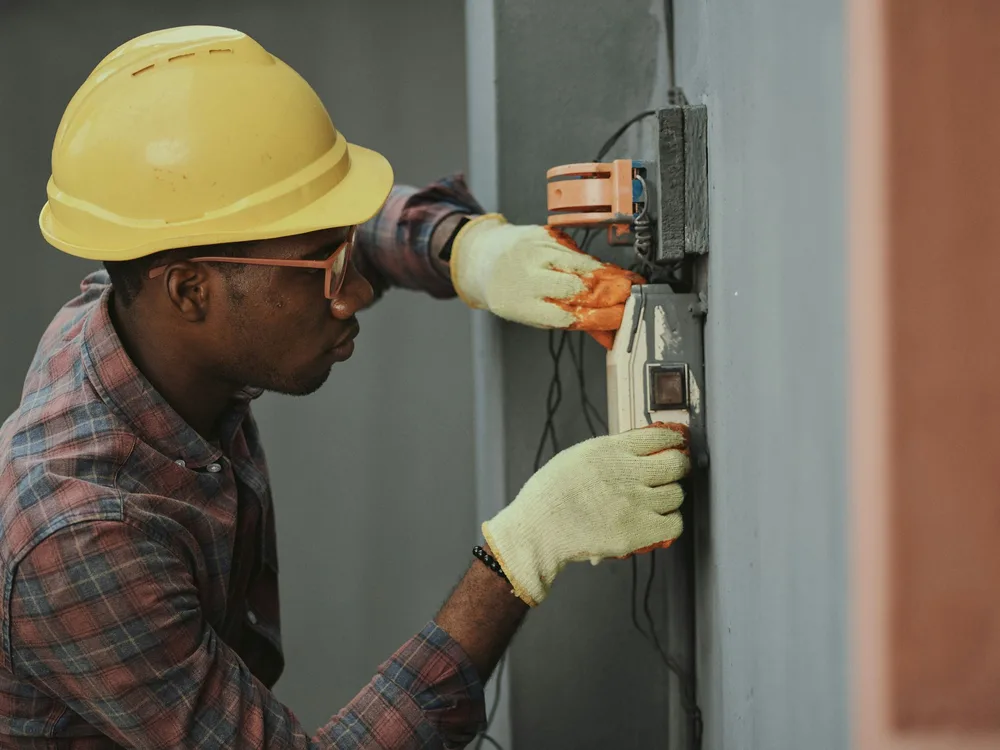
The line items behind a rewiring quote
| Item | Typical cost | Notes |
|---|---|---|
| Per opening (outlet, switch, fixture), rewire pricing | $100–$300+ | Some electricians quote this way instead of per square foot; Angi puts an added outlet or switch at $100–$185 |
| Opening and repairing walls | $4–$8 per square foot | Or $300–$1,500+ per patch — the line item that separates the two scopes above |
| Panel upgrade done at the same time | $3,000–$6,000 | For a 200A panel — most rewires of a pre-1970s home include one; see the panel upgrade cost guide |
| Permit and inspections | $250–$900 | National range for a rewiring permit; the Redding and Shasta County fee schedules are not published in a form this page can quote |
A good rewiring quote reads like this table: a per-square-foot or per-opening base, the panel as its own line, wall repair stated as included or excluded, and the permit and inspection fees shown rather than buried. Two quotes built the same way are easy to compare; one lump sum against another isn't.
Knob-and-tube and aluminum: the two wiring types that drive most rewires
Knob-and-tube was the standard in homes built before 1930 and was still going in some places into the 1950s. It has no ground wire, its insulation is now 70 to 100-plus years old, and it was designed for a house with a few lights and a radio, not one with a microwave, a dryer, and three televisions. It was built to shed heat in open air, which is why electricians tell homeowners not to bury it under attic insulation or let a handyman splice modern cable onto it — and some insurers decline or surcharge homes that still have it. Replacement runs $8–$17 per square foot because the houses that have it almost always have plaster walls too.
Aluminum branch wiring went into homes wired between 1965 and the mid-1970s. The problem isn't the wire so much as the connections, which loosen and oxidize over time; the U.S. Consumer Product Safety Commission's survey of pre-1972 aluminum-wired homes found connections at outlets far more likely to reach fire-hazard conditions than copper. CPSC accepts three permanent fixes: a full copper rewire, the COPALUM crimp repair at every connection, or AlumiConn connectors where COPALUM isn't available. The connection-by-connection repairs leave the walls closed, so an aluminum-wired house is the one case where "do I need to rewire?" often has a cheaper honest answer — ask for both options to be priced. Pigtailing with ordinary wire nuts is not on CPSC's list.
Most homes wired from the late 1970s on have grounded copper cable, and a house from that era rarely needs a whole-house rewire — it needs specific repairs, more circuits, or a bigger panel. If a quote for a 1990s house says "full rewire," get a second one.
Quick self-check: does my house need rewiring?
- 1
Look at the outlets
Two-slot outlets with no ground hole throughout the house, or outlets that are warm, discolored, or loose in the wall, point to original wiring that was never updated.
- 2
Open the panel door and read the labels
A fuse box instead of breakers, or a panel rated under 100 amps, usually dates the wiring with it. Look at the cable sheathing where circuits enter the panel: "AL" or "ALUMINUM" printed on the jacket means aluminum branch wiring.
- 3
Check the attic or crawlspace
Ceramic knobs and tubes with single wires strung between them is knob-and-tube. Cloth-covered cable, or splices made outside a junction box, are also signs the system predates modern code.
- 4
Count the symptoms, not just one
Breakers that trip on more than one circuit, lights that dim when an appliance starts, a burning smell with no source, or a buzzing outlet — one of these is a repair call; several together across the house is a rewire conversation.
- 5
Ask your insurer before you ask an electrician
Some carriers decline or surcharge homes with knob-and-tube or aluminum wiring. If a renewal or a sale is coming, find out what they will require — it may decide the scope for you.
Two or more of these and it's worth paying for a proper inspection. A single breaker that keeps tripping is usually a repair, not a rewire.
Permits and licensing in Redding and Shasta County
Treat a whole-house rewire as permitted work: it replaces every branch circuit and almost always touches the service panel. Which office handles it depends on your address, and the Redding area has four:
- Inside Redding city limits — the City's Building Division / Permit Center, 777 Cypress Avenue, through its EnerGov online portal.
- Unincorporated Shasta County — the County's own Building Division, through its BUILD SHASTA online portal. A different system from the City's.
- Anderson and Shasta Lake — separate incorporated cities with their own building departments; neither the City of Redding's nor the County's process applies there.
Neither the City nor the County publishes its electrical permit fee in a form this page can quote, so ask for it as a line item. The sequence is the same everywhere: the electrician pulls the permit, the new wiring is inspected at rough-in before any wall is closed, and a final inspection signs the job off. A rewire that skipped that — "we didn't bother with the permit" — is a problem at resale and with your insurer, not a saving.
On licensing: California's minor-work exemption lets unlicensed work happen only when the whole job is $1,000 or less, needs no permit, and the person doing it employs nobody else on the job. A rewire fails all three, which makes it C-10 electrical contractor work — our licensed-electrician guide covers the rule, and you can verify any license number at cslb.ca.gov in about a minute.
Common questions
How much does it cost to rewire a house in Redding, CA? +
As of October 2026, rewiring a house in Redding, CA typically runs $2–$4 per square foot for the wiring work itself ($5,000–$10,000 for 2,500 sq ft, per Angi's October 2026 data) and $5–$17 per square foot all-in once wall opening and patching, a panel upgrade and permits are included ($10,000–$30,000 typical, per HomeGuide's 2025 data). No Redding electrician publishes a local rewiring rate, so these are national benchmarks.
How much does knob-and-tube replacement cost? +
Replacing knob-and-tube wiring costs $8–$17 per square foot, or $12,000–$35,000 for a typical whole house, per HomeGuide's February 2026 data — more than a standard rewire because the homes that have it tend to have plaster walls and no grounding anywhere. Knob-and-tube was the standard before 1930 and was still being installed in some areas into the 1950s.
Do I need a permit to rewire a house in Redding? +
Treat a whole-house rewire as permitted work — it replaces every branch circuit and almost always touches the panel. Inside Redding city limits the permit goes through the City's Permit Center (EnerGov portal); unincorporated Shasta County addresses use the County's own BUILD SHASTA system; Anderson and Shasta Lake are separate cities with their own departments. The electrician normally pulls it, and the rough-in has to be inspected before any wall is closed up.
How long does a whole-house rewire take? +
3 to 10+ days of electrical work for a typical home, per HomeGuide, before any drywall patching and painting. Power is off to parts of the house during the work; most families stay in the home, but expect a few days without the kitchen or a bedroom circuit at a time.
Can I rewire my own house in California? +
Not legally, in practice. California's $1,000 minor-work exemption only covers unlicensed work when the whole job is $1,000 or less, needs no permit, and the person doing it employs nobody else — a rewire fails all three, so it is C-10 electrical contractor work. Verify any license at cslb.ca.gov before hiring.
Is aluminum wiring a reason to rewire? +
Not always a full rewire. Homes wired between 1965 and the mid-1970s may have aluminum branch circuits, and the U.S. Consumer Product Safety Commission lists three permanent fixes: complete replacement with copper, the COPALUM crimp repair at every connection, or AlumiConn connectors where COPALUM isn't available. An electrician who inspects the connections can tell you whether a connection-by-connection repair or a rewire is the right call for your house.
Get free quotes
Tell us what's going on
We'll connect you with independent local electricians who can help — no obligation, no cost to you.